

2026 ART KAOHSIUNG 高雄藝術博覽會 - Hidden Dragon Exhibition 潛龍特展
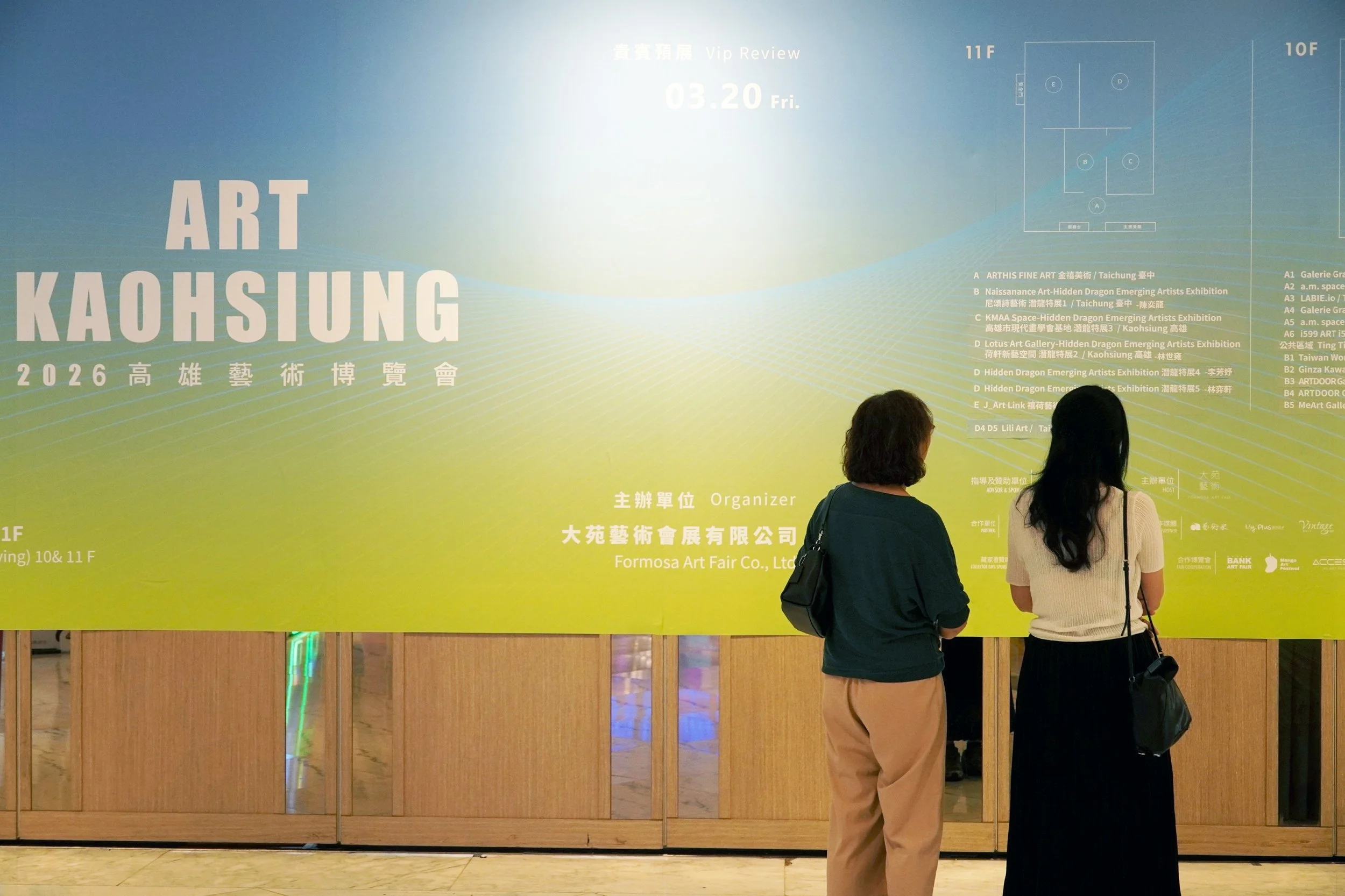
潛龍特展
新世代藝術能量的浮現——潛龍之勢
在全球藝術生態快速變化的當代,新銳藝術家的崛起已成為各大藝術博覽會與美術館關注的重要議題。無論是在歐洲、北美或亞洲,許多藝術機構皆積極透過各類專門計畫,挖掘具有潛力的年輕創作者。2026 年高雄藝術博覽會推出的「潛龍特展」,正是在這樣的國際藝術趨勢之下誕生。
「潛龍」一詞源自《易經》中的「潛龍勿用」,象徵尚未完全顯現、卻蘊藏巨大能量的存在。以此作為策展概念,意在呈現一群正處於創作生涯初期、但已展現高度潛力的藝術家。近年來,這些藝術家在台灣重要藝術競賽中嶄露頭角, 包括高雄獎、 臺北獎、中國信託當代繪畫獎、鴻梅新人獎、中山藝術獎與璞玉發光等指標性獎項。
這些藝術獎項長期被視為台灣當代藝術的重要觀察平台。許多今日活躍於國際藝壇的藝術家,在創作早期都曾透過藝術競賽被發掘。因此,競賽不僅是藝術家職涯的重要里程碑,也成為觀察新世代藝術發展的重要線索。
本次 「潛龍特展」 匯集林弈軒、 王仲平、 林世雍、 李芳妤、 邱子晏、張凱亘、陳奕龍、吳惠淳、張宸瑋、葉哲瑀與王柏欽等十一位藝術家。他們的創作媒材涵蓋繪畫、雕塑與裝置藝術,呈現出台灣年輕藝術家多元而開放的創作面貌。
從作品層面觀察,可以發現這一世代藝術家不再侷限於單一媒材,而是更加關注跨媒材與跨領域的創作方式。繪畫不再只是傳統的平面表現,而是與敘事、心理感知以及當代影像文化產生連結; 雕塑與裝置則更強調空間感、 身體經驗與環境之間的互動關係。
這種創作語言的轉變,也反映出全球當代藝術的一項共同趨人經驗的綜合回應。
國際視野:新世代藝術家的崛起
在全球藝術市場中,新銳藝術家的崛起已成為重要現象。許多藝博會與畫廊都積極尋找下一代具有潛力的創作者。
例如英國藝術家 Flora Yukhnovich 在三十歲左右即受到國際畫廊與拍賣市場的高度關注,其作品將古典洛可可繪畫語言轉化為流
動而充滿能量的抽象畫面。
來自迦納的畫家 Amoako Boafo 則透過極具辨識度的人物肖像,在短時間內迅速進入國際藝術市場,並被多家重要美術館收藏。
另一位備受矚目的藝術家是 Jadé Fadojutimi,她在二十多歲時即獲得大型美術館展覽機會,其色彩奔放的抽象繪畫迅速受到收藏界關注。
這些藝術家的崛起顯示,當代藝術世界對於「年輕創作能量」的重視程度正在提高。許多收藏家與藝術機構開始在藝術家職涯早期即投入支持,以期見證其創作發展的長期價值。
在亞洲,這樣的趨勢同樣明顯。香港、首爾與新加坡的藝術博覽會,近年都設有專門展示新銳藝術家的展區。這些平台往往成為收藏家與畫廊發現下一代藝術家的重要場所。
在此背景下,「潛龍特展」也提供了一個觀察台灣新世代藝術發展的重要窗口。
新世代藝術語言的多樣性
此次參展的藝術家在創作媒材與表現方式上呈現出高度多樣性。
在繪畫領域中,李芳妤、林弈軒等藝術家,透過細膩的畫面語言探索情感、記憶與日常經驗。其作品往往在具象與抽象之間建立流動關係,使畫面同時具有敘事與詩意的雙重層次。類似的特質也見於王仲平的攝影實踐。林世雍與張凱亘的創作則更關注空間與形式結構。透過畫面節奏與構圖關係,他們在作品中建立出具有哲學意味的觀看經驗。
另一方面,雕塑與裝置創作也在這批藝術家之中占有重要位置。張宸瑋的雕塑作品強調材料特性與空間互動,展現出新世代雕塑對於空間感知的探索;邱子晏則透過裝置與影像創作,關注城市文化與社會結構,使藝術與當代生活產生更直接的連結。
這種跨媒材與跨領域的創作方式,顯示出台灣年輕藝術家在國際藝術語境中的開放態度。他們既吸收全球當代藝術的觀念,也在作品中融入自身文化經驗,逐漸形成具有地方特色的藝術語言。
潛龍藝術家未來發展的可能性
在藝術市場中,許多重要藝術家的早期作品,往往在尚未受到廣泛注意之前,就已被具有遠見的收藏家所發掘。對於收藏界而言,新銳藝術家的作品不僅代表創作能量,也蘊含長期的文化價值。
「潛龍特展」正提供了一個難得的平台,使觀眾與收藏家得以在同一空間中觀察台灣新世代藝術家的創作面貌。從繪畫到雕塑,從敘事到抽象,這些作品共同構成了一種正在形成中的文化風景。
藝術史往往是在回顧時才逐漸顯現其脈絡。許多重要藝術運動,都源於一群在同一時期崛起的創作者,例如 20 世紀初的巴黎前衛藝術、1960 年代的紐約藝術圈,或 1990 年代的倫敦新銳藝術家。今日我們或許尚無法確定這一群台灣藝術家未來將走向何處,但可以確定的是,他們已經展現出值得關注的創作能量。
當潛龍逐漸浮出水面,新的藝術力量也正在形成。
“Hidden Dragon: Emerging Artists Exhibition”
A New Generation of Artistic Energy in Taiwan
In the rapidly shifting landscape of contemporary art, the emergence of young artists has become a focal point for museums, galleries, and art fairs worldwide. Across Europe, North America, and Asia, cultural institutions are increasingly establishing dedicated programs to identify and support artists at the early stages of their careers. These initiatives not only nurture new talent but also serve as vital indicators of the future direction of contemporary art. Presented within this international context, the Hidden Dragon: Emerging Artists Exhibition at the 2026 Art Kaohsiung Art Fair offers a platform for a group of promising Taiwanese artists whose practices signal the evolving energy of a new generation.
The title “Hidden Dragon ” draws inspiration from “I Ching,” where the phrase “Hidden Dragon” refers to latent power that has yet to fully reveal itself. As a curatorial concept, it suggests a moment of quiet potential―artists whose creative forces are still being developed but already demonstrate compelling originality. The artists selected for this project have recently gained recognition through major art competitions in Taiwan, including the Kaohsiung Award, the Taipei Fine Art Award, the CTBC Painting Prize, the Grand View Emerging Artists Award, the Chung-Shan Youth Art Award, and the Luminous Art Marketing award.
These awards have long served as key platforms for identifying emerging voices in Taiwan ’s contemporary art scene. Historically, many artists who later achieved international recognition were first discovered through such competitions. In this sense, art awards function not only as milestones within an artist ’s career, but also as important markers for observing the emergence of new artistic movements.
The Hidden Dragon: Emerging Artists Exhibition brings together eleven artists: LIN Yi-Hsuan, WANG Chung-Ping, LIN Shih-Yung, LEE Fang-Yu, CIOU Zih-Yan, CHANG Kai-Hsuan, CHEN I-Long, WU Hui-Chun, CHANG Chen-Wei, YEH Jhe-Yu, and WANG Po-Chin. Their creative forms encompass painting, sculpture, and installation art, showcasing the diverse and open creative environment for young Taiwanese artists.
Observing the artworks, it can be seen that this generation of artists is no longer limited to a single form, but pays more attention to cross-media and cross-disciplinary creative approaches. Painting is no longer just a traditional two-dimensional representation, but connects with narrative, psychological perception, and contemporary video culture; sculpture and installation emphasize the interaction between spatial sense, bodily experience, and environment.
This shift in creative language also reflects a common trend in contemporary art worldwide―art is no longer just a This shift in creative language also reflects a common trend in contemporary art worldwide―Art is no longer just a form’s exploration but a comprehensive response to social, cultural, and personal experiences.
These art awards have long been regarded as an important platform for observing contemporary Taiwanese art. Many artists active on the international art scene today were discovered through art competitions in their early careers. Therefore, competitions are not only important milestones in an artist’s career, bur also important clues of observing the development of a new generation of art.
International Perspective: The Rise of New Generation Artists
The rise of new generation artists has become a significant phenomenon in the global art market. Many art fairs and galleries are actively looking for the next generation of promising creators.
For example, British artist Flora Yukhnovich gained significant attention from international galleries and the auction market in her early thirties. Her work transforms the visual language of classical Rococo painting into fluid and dynamic abstract compositions.
Another example is Ghanaian painter Amoako Boafo, whose highly distinctive portraits quickly entered the international art market and were acquired by several major museums.
Another notable artist is Jadé Fadojutimi, who secured major museum exhibitions in her twenties, and whose vibrantly colored abstract paintings quickly attracted collector’s attention.
The rise of these artists shows the increasing importance the contemporary art world places on “young creative energy.” Many collectors and art institutions are beginning to support artists early in their careers, hoping to witness the long-term value of their creative development.
This trend is equally evident in Asia. Art fairs in Hong Kong, Seoul, and Singapore have recently included dedicated sections showcasing emerging artists. These platforms often become important venues for collectors and galleries to discover the next generation of artists.
In this context, the "Hidden Dragon" exhibition also provides an important window into the development of Taiwan's new generation of art.
Diversity of Artistic Languages in the New Generation
The participating artists in the present exhibition demonstrate a high degree of diversity in medium and expressive method.
In painting, artists such as LEE Fang-Yu and LIN Yi-Hsuan explore emotions, memories, and everyday experiences through delicate pictorial language. Their artworks often establish a fluid relationship between figuration and abstraction, giving the paintings a dual layer of narrative and poetry. Similar qualities are also seen in WANG Chung-Ping's photographic practice. LIN Shih-Yung and CHANG Kai-Hsung's artworks focus more on space and formal structure. Through the rhythm and composition of their paintings, they establish a philosophically meaningful viewing experience.
On the other hand, sculpture and installation also occupy an important place among these artists. CHANG Chen-Wei's sculptures emphasize the characteristics of materials and spatial interaction, showcasing the exploration of spatial perception by a new generation of sculptors; CIOU Zih-Yan, through installation and video works, focuses on urban culture and social structures, creating a more direct connection between art and contemporary life. This cross-form and cross-sphere approach to creation demonstrates the open attitude of young Taiwanese artists in the international art context.
“Hidden Dragon ” Artists ’ Potential for Future Development
In the art market, early works by many important artists are often discovered by sagacious collectors before they receive vast attention. For collectors, the artworks of new generation artists not only represent creative energy but also possess long-term cultural value.
The "Hidden Dragon" exhibition provides a rare platform, allowing viewers and collectors to observe the creative landscape of Taiwan's new generation artists in the same space. From painting to sculpture, from narrative to abstract, these artworks collectively constitute an emerging cultural landscape.
Art history often reveals its trajectory only in retrospect. Many important art movements originated from groups of creators who rose to prominence in the same period, such as the Parisian avant-garde art of the early 20th century, the New York art scene of the 1960s, or the emerging artists of London in the 1990s.
It may be too early to determine the trajectories their careers will take. However, it is clear that their artworks already reveal a creative energy that deserves close attention.
As these hidden dragons gradually rise, new artistic forces begin to take shape.
